
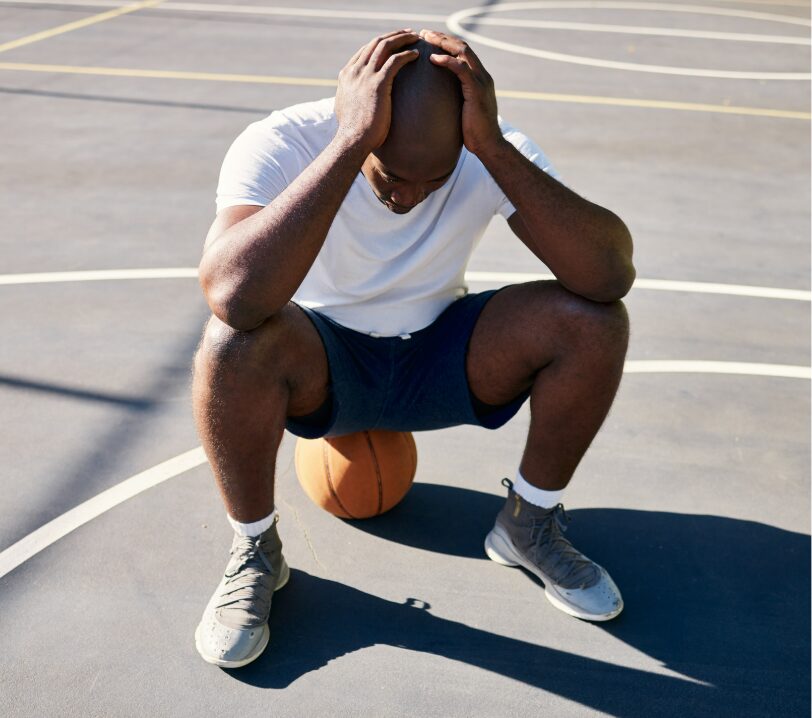
The other night, my boys and I played in a tournament held at the Round Rock Sports Center in the Austin, Texas area. It was the Road to Nationals 10th Annual Austin Classic National Qualifier (See the reviews on Sportoriety.com). This tournament brought in some of the best teams in Texas in every age group. The competition was great, to say the least!
We had our first game on Friday night against a team from Houston, Texas. We got absolutely demolished. Our team is from a suburb just outside of Austin, TX that operates a lot like a small town. There are good basketball players here, but not as many as a large city like Houston, TX can produce. The boys just weren’t used to competition like that. The other team played disciplined and hard from tip-off to the final buzzer. Kudos to their coaches for coaching up such a tough team.
During the game, you could see our boys getting discouraged. In fact, toward the end of the game, one of our boys asked a really good question: “What are we supposed to do when we’re totally outmatched like we were?”
It’s a great question because, although he was asking this from a basketball perspective, the same question applies to life. At the end of the day, we’re basketball coaches, but the lessons we teach go well beyond basketball. Most of these kids won’t play professional or even college basketball, but the lessons they learn from the game can last a lifetime.
Embracing Failure
Aside from the occasional butt-whooping, basketball is a game of failure.
- Nearly every player misses more shots than they make.
- Nearly every player will miss a box-out at least a couple of times a game.
- Every team turns the ball over.
These facts persist at early levels of basketball all the way to the highest levels of the sport. For the 2025-2026 NBA season, the average shooting percentage is approximately 47.5%. NBA teams average between 13 and 15 turnovers a game. Failure is persistent at even the highest levels of the sport.
So, what does this have to do with kids, and what does that teach them about life?
With failure being such a central part of the sport, kids have to learn how to embrace it. In a basketball game, kids need to shoot the ball. One of the toughest things to teach kids at the youth basketball level is to shoot and not be afraid to miss. On our team, we celebrate a shot—even if it misses spectacularly—because if you never shoot, you never have a chance to make it.
If you’re playing defense, play hard. If the ref calls a foul on you, I’ll never be upset because you earned the foul trying to do the right thing and play hard for yourself and your teammates. Basketball teaches kids that failure is okay. It teaches kids that you can’t worry about the last play—the only thing you can control is the next play. In basketball (and really all sports), you have to be resilient in the face of failure, and that’s the lesson I’ve taken from the sport into adulthood.
Controlling the Controllables
So, what happened after our team got absolutely smoked on Friday night?
We talked to the boys and told them basically what I’ve written out in this blog post. We also told them that they have a choice right now. They can let this loss stop them from going forward in basketball, or they can use the loss as information that helps them understand what the competition looks like out there and what they need to do to become better basketball players.
The other thing we shared, and one of my biggest takeaways for them, is that at the end of the day, you can’t control who you compete against—you can only control how you play.
I can’t control if the guys on the other team are bigger, faster, stronger, and just plain better than us. What I can control is how hard I play:
- How hard do I sprint back on defense?
- How much effort do I put into boxing out?
- How much work do I put into staying in front of my man on defense?
- How much do I encourage my teammates?
- What decisions do I make on the court?
Those are the things you can control in the heat of the ball game, and those are the things that all players should focus on. Those are the things the boys on my team chose to focus on the rest of the tournament.
Again, this isn’t only true in sports; it’s true in life. Time after time, we face setbacks that are out of our control. It’s up to us to decide how we want to handle them. Do we want them to defeat us, or do we want to fight back and pick ourselves up like any great athlete would?
We can’t control what people say or do; all we can control is how we choose to react.