
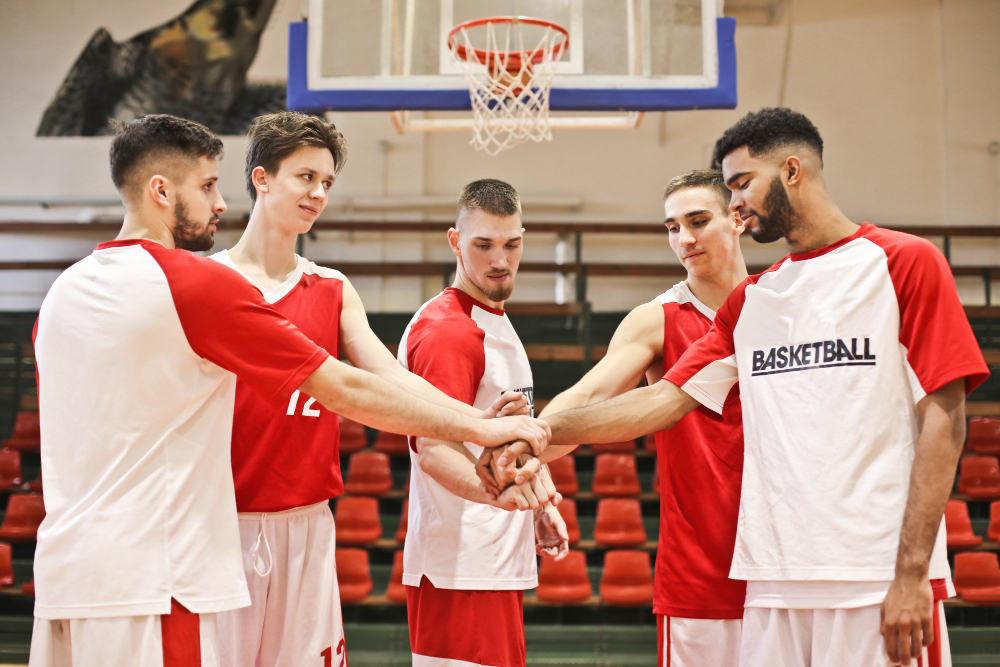
When we talk about “team chemistry” in youth basketball, it’s easy to picture perfectly timed pick-and-rolls or crisp, no-look passes. But in my experience as both a player and a coach, true chemistry isn’t just about knowing where your teammate is going to be on the floor. It’s about knowing, without a shadow of a doubt, that your teammate has your back.
Trust is the engine that drives a successful team. But trust isn’t handed out with the jerseys at the start of the season; it’s earned. And more importantly, it’s earned not just when things go right, but when things go wrong.
The Courage to Make a Play
Trust is built when a player follows through on their responsibilities, but it is solidified when a player tries, fails, and is instantly picked up by their teammates.
If a player makes a mistake and is immediately torn down by the kids sharing their bench, trust erodes. Suddenly, that player is playing out of fear. They become terrified to make a play, take a shot, or make a crucial read because they are worried about the backlash from their own team.
On my team, we focus on the process, not just the result.
-
The Missed Open Shot: I do not care if a kid shoots a wide-open shot and misses. I will cheer on the attempt every time, because it took good, fundamentally sound basketball to create that open look in the first place.
-
The Aggressive Foul: If one of my post players takes the ball up strong to the rim and gets called for an offensive foul, I’m thrilled they tried. It takes a great rebound or a strong, decisive post move to get into that position.
When teammates support the attempt rather than criticizing the miss, players feel free to play the game the way it’s meant to be played.
The Science of Having Each Other’s Backs
There is actually a psychological term for this environment: Psychological Safety.
Coined by Harvard organizational behavioral scientist Amy Edmondson, psychological safety is the belief that you won’t be punished or humiliated for speaking up with ideas, questions, concerns, or mistakes. Studies show that teams with high psychological safety are the most successful and innovative.
On the basketball court, psychological safety means a player knows they won’t be ridiculed by their peers for missing a rotation or throwing a pass out of bounds. When that fear is removed, players process information faster, react quicker, and ultimately perform better.
The “Lunch Table” Rule: Chemistry Beyond the Court
I am a firm believer that trust cannot be built solely on the basketball court. Chemistry requires a foundation of everyday respect.
All the boys on my team happen to go to the same school, and because of that, I have a few simple, non-negotiable rules for them off the hardwood:
-
Eat lunch together. 2. Have each other’s backs in the hallways and classrooms.
What does that look like in practice? If you know a teammate is struggling in math and you excel at it, you offer to help them out. If a teammate forgets their lunch and you have extra food, you should be the first person they feel comfortable approaching.
The Reality Check: If you can’t trust and respect each other in everyday life—in the cafeteria, during a tough test, or walking down the hallway—how can you possibly expect to trust and respect each other in the heat of a tight fourth quarter?
The Final Buzzer
Close-knit teams that genuinely trust each other have a massive advantage when the game is on the line. Teams that don’t trust each other will almost always fracture when adversity hits.
By demanding that players support each other through mistakes on the court, and requiring them to be good friends and peers off the court, we aren’t just building better basketball players. We are building a brotherhood that naturally translates into winning basketball.